Published
January 26, 2026
Robotic Process Automation (RPA) was a bridge technology. Learn why flexible Vision Language Models (VLM) are replacing brittle scripts in modern supply chains.
For the past decade, logistics companies have tried to solve the “Paperwork Problem” with Robotic Process Automation (RPA).
The promise was seductive: “Record a macro of a human clicking through a PDF, and let a bot do it forever.”
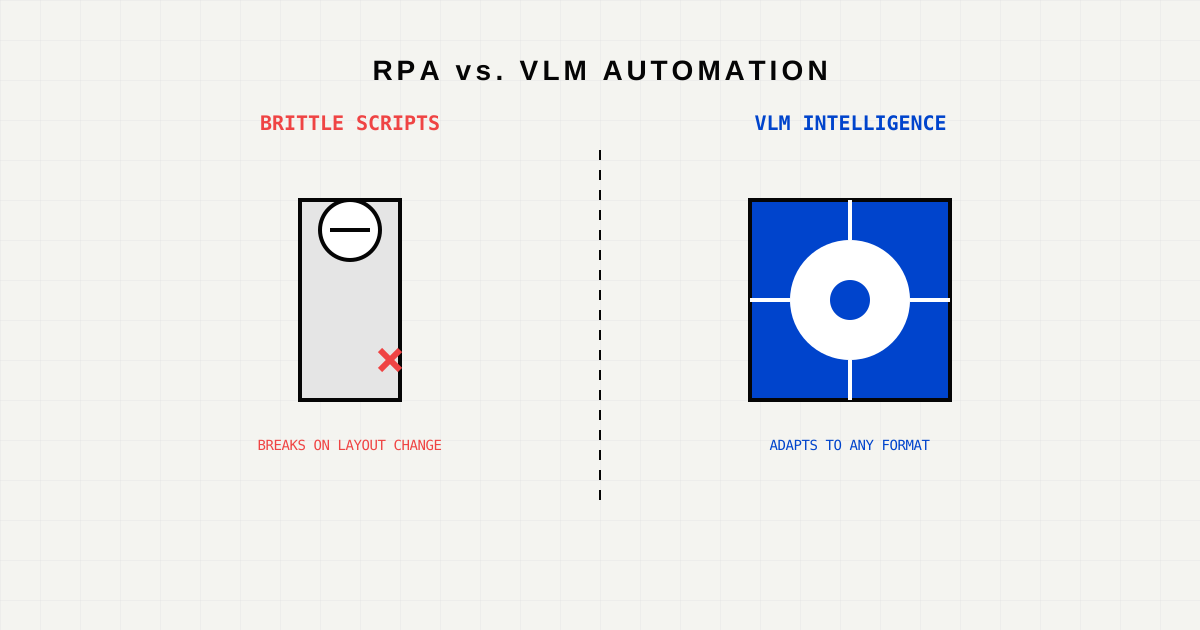
The reality has been a maintenance nightmare. RPA scripts are brittle. They rely on fixed coordinates, specific HTML tags, or rigid templates. In the chaotic world of global logistics—where every Bill of Lading, Invoice, and Packing List looks slightly different—RPA bots break constantly.
LeapOCR takes a different approach. We don’t automate the clicks; we automate the understanding.
RPA scripts are essentially blind. They don’t “see” a document; they navigate a coordinate grid.
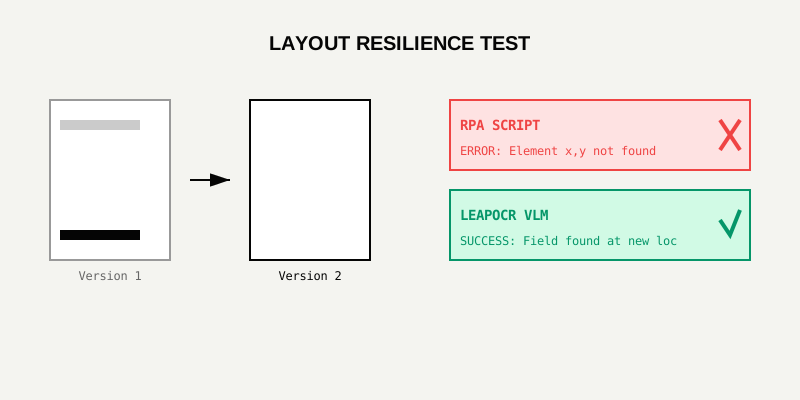
In-house RPA projects often look cheap on Day 1. You pay a developer to write a Python script or configure a UIPath bot.
But logistics documents are not static. Carriers change formats. New suppliers are onboarded. Customs regulations update forms.
Every time a format changes, an engineer has to “hotfix” the RPA bot.
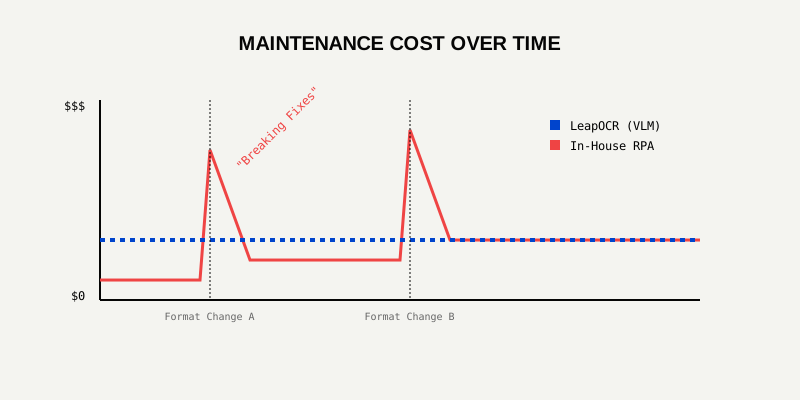
As the chart above illustrates, RPA maintenance costs scale with complexity. LeapOCR’s VLM absorbs this complexity. Our models are pre-trained on millions of logistics documents, giving them “Zero-Shot” capabilities. They can handle a format they’ve never seen before without a single line of code change.
| Feature | In-House RPA | LeapOCR VLM |
|---|---|---|
| Setup Time | Weeks (per template) | Minutes (per schema) |
| Layout Flexibility | None (Brittle) | High (Adaptive) |
| Handwriting | Fails 100% | Pro-V1 Engine (99%) |
| Validation | Regex Only | Contextual Logic |
| Maintenance | High (1 FTE per 10 bots) | Zero (SaaS) |
We aren’t saying RPA is dead. It has a place: Internal Systems. If you need to move data between your internal ERP and your internal WMS—and you control the interfaces of both—RPA is great.
But for External Documents (anything coming from a supplier, carrier, or customer), RPA is a tech debt trap. You cannot control the external world. You need an adaptive layer.
Don’t build fragile robots to do cognitive work. Use RPA to move data after it has been extracted. Use LeapOCR to perform the extraction itself.
Stop maintaining scripts. Start processing freight.
Retire your bots. Compare VLM Accuracy or calculate your RPA maintenance savings.
Try LeapOCR on your own documents
Eligible paid plans include a 3-day trial with 100 credits after you add a credit card, so you can test actual PDFs, scans, and forms before committing to a rollout.
Keep reading
More implementation guides, benchmarks, and workflow notes for teams building document pipelines.
The warehouse receipt is the moment of truth for inventory. Learn how converting these documents into real-time structured data feeds eliminates shortage claims and speeds up order fulfillment.
Detention and demurrage fees are the silent killers of logistics margins. See how automated document processing stops the clock and saves $100+ per container daily.
Global trade doesn't happen in just English. Here is how Vision Language Models (VLM) handle commercial invoices, waybills, and customs declarations that mix languages and formats.