Published
January 26, 2026
The warehouse receipt is the moment of truth for inventory. Learn how converting these documents into real-time structured data feeds eliminates shortage claims and speeds up order fulfillment.
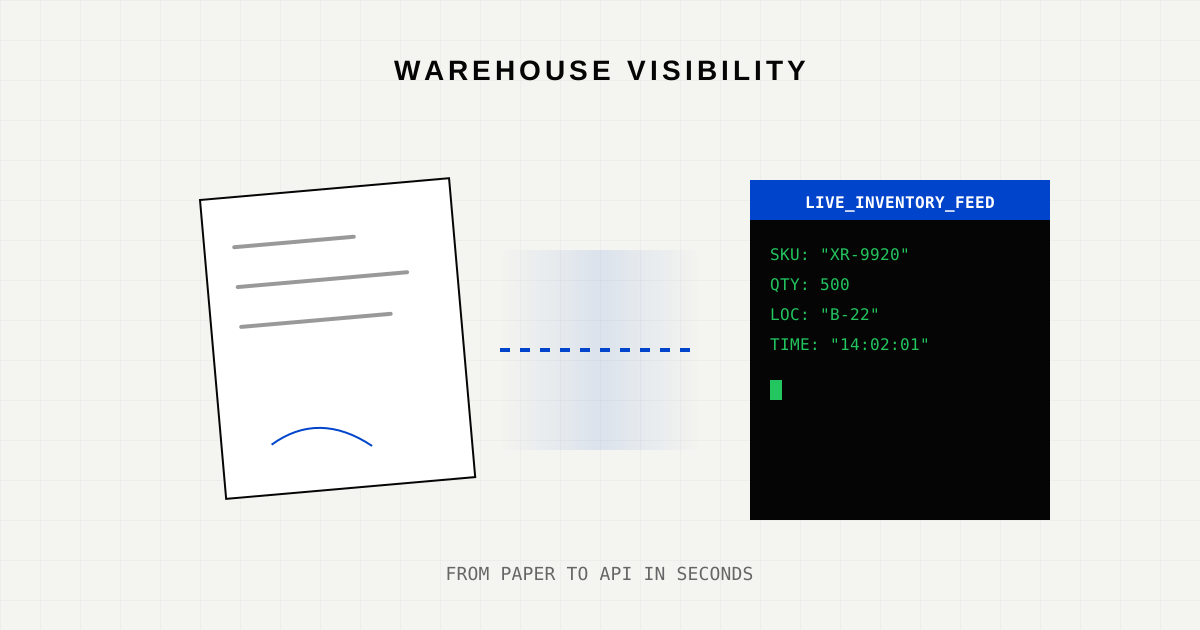
In the modern supply chain, we track ships via satellite and delivery trucks via GPS. Yet, inside the warehouse—the very heart of inventory management—visibility often goes dark.
The culprit? The Warehouse Receipt.
This document (often just a signed packing slip or a scrawled bill of lading) confirms that goods have physically arrived and been accepted. Until this piece of paper is processed, the inventory does not exist in your ERP or WMS (Warehouse Management System). It sits on the dock, invisible to sales teams, finance, and customers.
When a pallet arrives at 9:00 AM but the receipt isn’t keyed in until 4:00 PM the next day, you create a visibility gap.
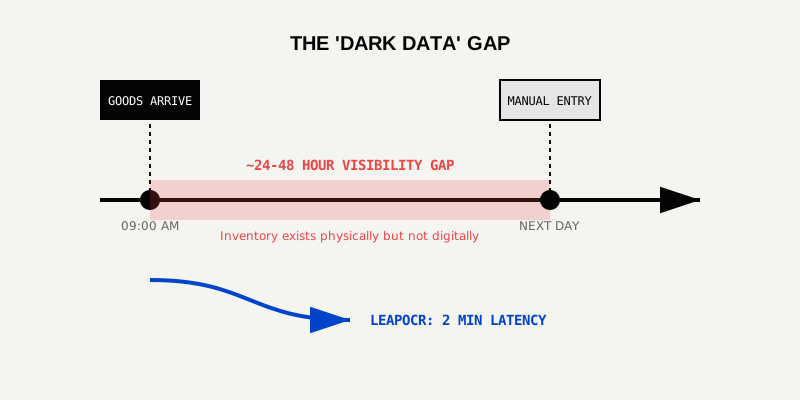
During this “Dark Data” period:
For 3PLs (Third-Party Logistics), this lag is even more critical. Your SLA (Service Level Agreement) might promise “dock-to-stock” in 24 hours. If manual entry takes 20 hours, you have only 4 hours left to physically put the goods away.
The solution is not to hire more data entry clerks. It is to digitize the ingestion point.
Using LeapOCR, high-volume 3PLs and distribution centers automate this process. Warehouse staff simply scan or snap a photo of the receipt at the dock door.
Warehouse receipts are notoriously non-standard. A vendor might write “200 pcs”, “200 ea”, or “200 @ 5kg”.
A human brain handles this ambiguity easily. Traditional rules-based OCR fails miserably.
LeapOCR uses Large Language Models (LLMs) to understand context and normalize data before it hits your system.
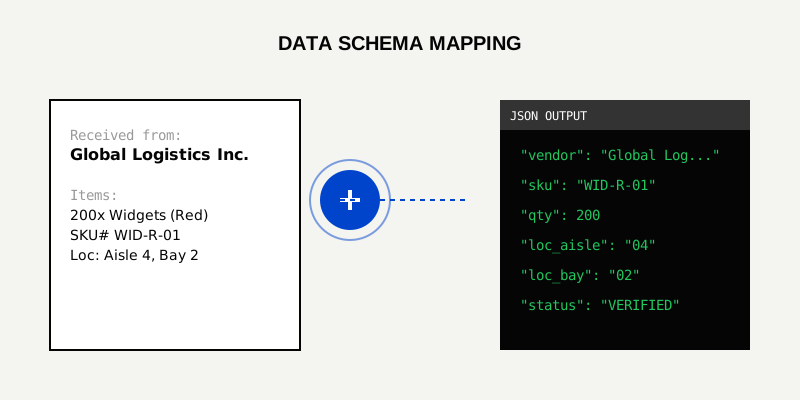
This normalization is key. It ensures that WID-R-01 from the vendor matches Item: Widget Red in your WMS.
Implementing real-time receipt processing changes the operational tempo of a warehouse.
Real-time visibility is impossible with batch-processed data. To build a responsive supply chain, you must digitize the handover handshake.
By treating warehouse receipts as data streams rather than paper records, you close the gap between physical reality and digital truth.
Upgrade your WMS with Vision. Explore the LeapOCR Warehouse API or view the schema documentation.
Try LeapOCR on your own documents
Eligible paid plans include a 3-day trial with 100 credits after you add a credit card, so you can test actual PDFs, scans, and forms before committing to a rollout.
Keep reading
More implementation guides, benchmarks, and workflow notes for teams building document pipelines.
Robotic Process Automation (RPA) was a bridge technology. Learn why flexible Vision Language Models (VLM) are replacing brittle scripts in modern supply chains.
Detention and demurrage fees are the silent killers of logistics margins. See how automated document processing stops the clock and saves $100+ per container daily.
How extracting signatures and timestamps from PODs accelerates invoicing and cash flow.