Published
January 18, 2025
We calculated the real cost of manual ESG data collection. It’s not just the labor—it’s the missed opportunities, the audit risks, and the team burnout.
If you work in sustainability, you know the month-end data collection drill.
The analysis itself isn’t the problem. It’s everything leading up to it—the emails to six facility managers about utility bills that should have been uploaded weeks ago, the 50 PDFs you open to copy-paste a single kilowatt-hour figure, the master spreadsheet that takes 20 seconds to save each time you make a change.
ESG discussions tend to focus on strategy: net zero targets, decarbonization pathways, supplier engagement programs. But for most teams, the day-to-day reality looks more like data entry.
About 47% of organizations still rely on spreadsheets for ESG reporting. This approach comes with real costs. With the CSRD Omnibus proposal reshaping the compliance landscape in 2025, manual processes are becoming increasingly problematic. When we break down the numbers, a mid-sized company often spends over €350,000 annually on manual reporting.
Here’s how that money gets spent.
Consider a realistic scenario: a manufacturing company with 12 facilities across Europe. They’re not a massive conglomerate, but they have substantial reporting requirements.
On paper, their data collection process keeps them compliant. In practice, it breaks down like this:
This involves tracking down invoices, receipts, and certificates from suppliers and internal stakeholders. Sustainability managers spend significant time following up on missing documents.
The problem? You’re paying highly qualified sustainability experts to perform administrative work that doesn’t leverage their actual expertise.
The workflow is straightforward: open a PDF, locate the relevant date and usage figures, type them into Excel, check for typos, repeat 500 times.
The result: a team of specialists spends three weeks of each month just gathering data, leaving only one week for actual analysis.
Questions like “Why did consumption spike 400% in Factory B?” trigger time-consuming investigations. Often the answer is simple—someone typed an extra zero—but finding that error requires hours of cross-referencing.
This costs approximately €82,000 per year in analyst time spent fixing preventable mistakes.
When auditors arrive, they don’t want your spreadsheet; they want the source documents. Linking every cell back to the original PDF invoice becomes a major undertaking if you haven’t been tracking these connections from the start.
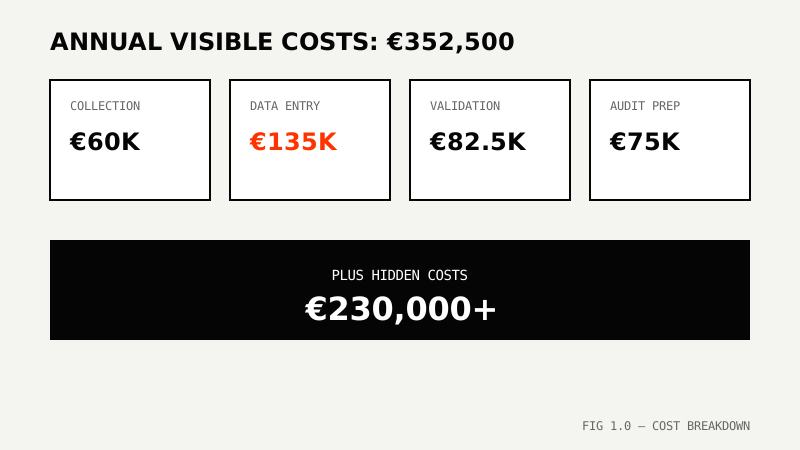 FIG 1.0 — What feels like routine administrative work costs over €350k annually in labor.
Direct labor costs tell only part of the story. The hidden costs compound quickly.
When data collection takes six weeks, you’re always working with old information. You can’t address an energy leak that happened two months ago—the bill has already been paid.
Companies typically miss an estimated 3-5% in annual energy savings because they identify problems too late. That’s roughly €75,000 in unnecessary costs.
Sustainability professionals entered the field to work on sustainability challenges, not to copy-paste data from invoices. When 80% of their workload consists of data entry, they tend to leave.
Replacing a specialized ESG analyst costs approximately €25,000 in recruitment and training, not to mention the institutional knowledge that disappears when they walk out the door.
Investors and regulators have grown skeptical of “estimated” data. Under CSRD, data quality carries real weight. Errors in your spreadsheet aren’t just typos—they represent compliance exposure.
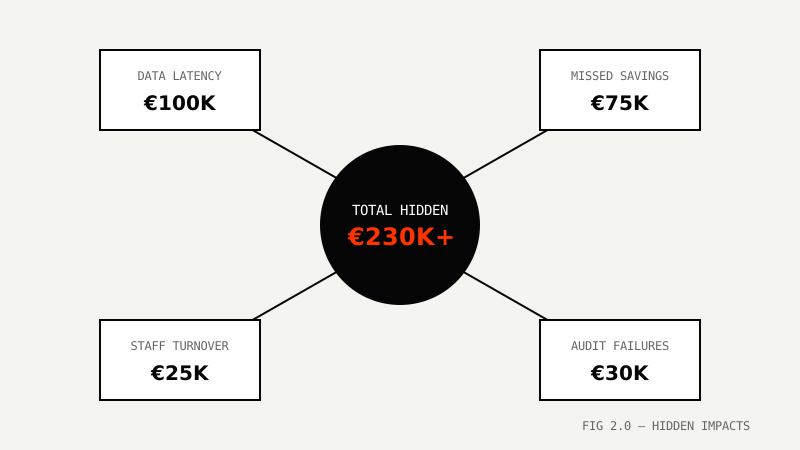 FIG 2.0 — Manual processes create nearly as much invisible cost as direct labor expense.
We worked with a manufacturing company that fit the profile described above. They were overwhelmed by paperwork.
They implemented an automated Document AI workflow. Instead of manually typing data, they now forward emails and upload folders. The AI extracts the data, validates units, and flags anomalies.
The change wasn’t just about cost savings (though they reduced reporting costs by 71%). More importantly, it changed what the team could do with their time.
Instead of entering data, they started analyzing it:
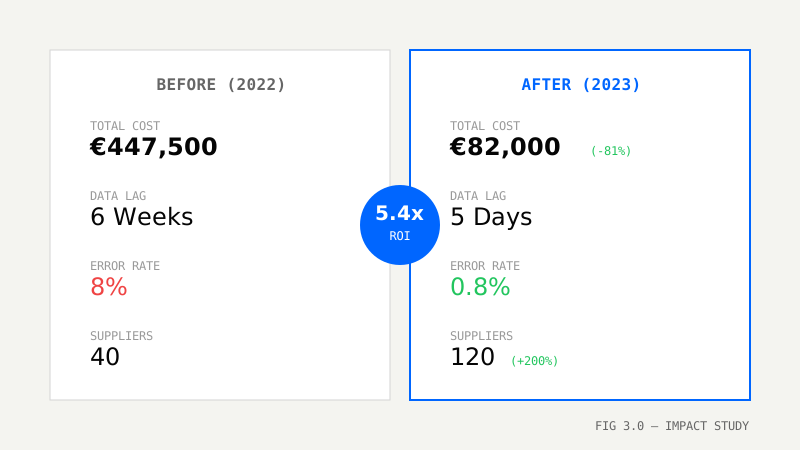 FIG 3.0 — The ROI extended beyond finance to operations.
Automation requires investment, and it’s not free. But the economics are changing.
The CSRD Omnibus proposal has raised some thresholds, which might suggest reduced pressure. However, your largest customers still need your data to report their Scope 3 emissions, and they won’t accept disorganized spreadsheets indefinitely.
Many teams assume “implementing AI” means a six-month consulting project. For document extraction, the timeline is typically shorter.
Most teams go from kickoff to full automation in about eight weeks:
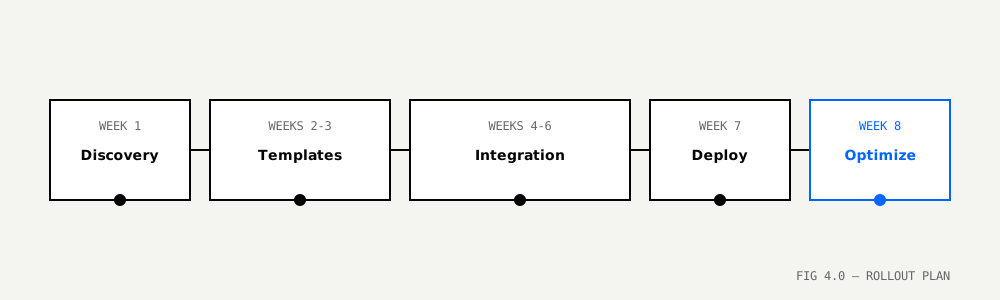 FIG 4.0 — You can implement a solution within a single quarter.
You hired your sustainability team to work on sustainability, not to serve as data entry clerks.
Every hour spent typing figures into Excel represents time not spent on decarbonization, strategy, or innovation.
If you process more than 100 documents per month, manual reporting likely costs more than automation would. Let the machines handle data entry so your team can focus on the actual work.
Ready to eliminate the copy-paste work?
Try LeapOCR on your own documents
Eligible paid plans include a 3-day trial with 100 credits after you add a credit card, so you can test actual PDFs, scans, and forms before committing to a rollout.
Keep reading
More implementation guides, benchmarks, and workflow notes for teams building document pipelines.

CSRD isn't just about compliance; it's a data engineering problem. Here is how to build an automated pipeline that turns scattered PDFs into audit-ready JSON.
Explanation of Scope 3 emissions. The challenge of collecting data from third-party documents. How AI can automate this collection.
How auditors are demanding structured data and the role of AI in preparing this data for external verification.