Published
January 18, 2025
CSRD isn't just about compliance; it's a data engineering problem. Here is how to build an automated pipeline that turns scattered PDFs into audit-ready JSON.

The Corporate Sustainability Reporting Directive (CSRD) feels overwhelming for most teams. The transparency requirements make sense, but the implementation is daunting. Companies need to track 1,144 potential data points across their operations, conduct Double Materiality Assessments across their supply chain, and somehow manage all of this with minimal staff.
Many organizations attempt to solve CSRD compliance using email chains and shared spreadsheets. This approach rarely works at scale.
CSRD has evolved beyond a sustainability reporting exercise into a data engineering challenge. Organizations that treat it as such can build systems that scale, while those relying on manual processes struggle to keep up.
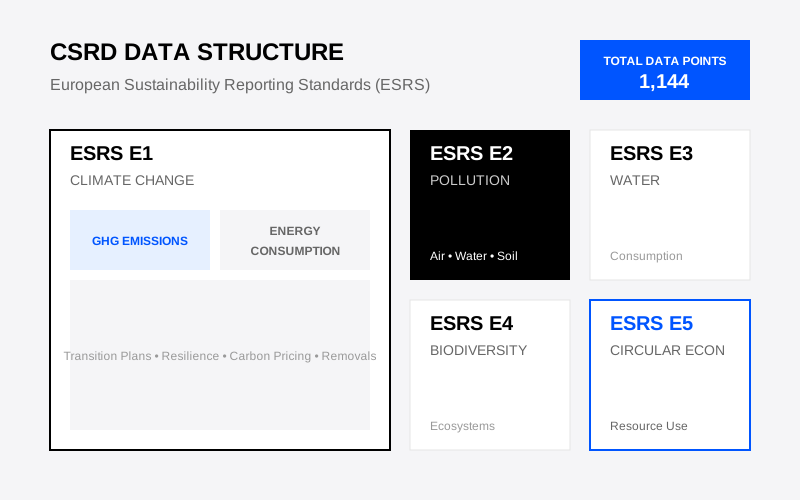 FIG 1.0 — The CSRD framework spans 1,144 specific data points nested across 12 standards.
Sustainability teams consistently face the same problem: their data exists, but it lives in too many places.
Manual data collection requires a full-time commitment. Teams spend most of their time locating files rather than analyzing them. When auditors request source documentation for specific data points, companies often struggle to provide it quickly.
The economics of manual processing are difficult to justify. A mid-sized enterprise processing 500+ ESG documents annually spends approximately €220,000 per year on labor and error correction. An automated pipeline reduces this to around €30,000.
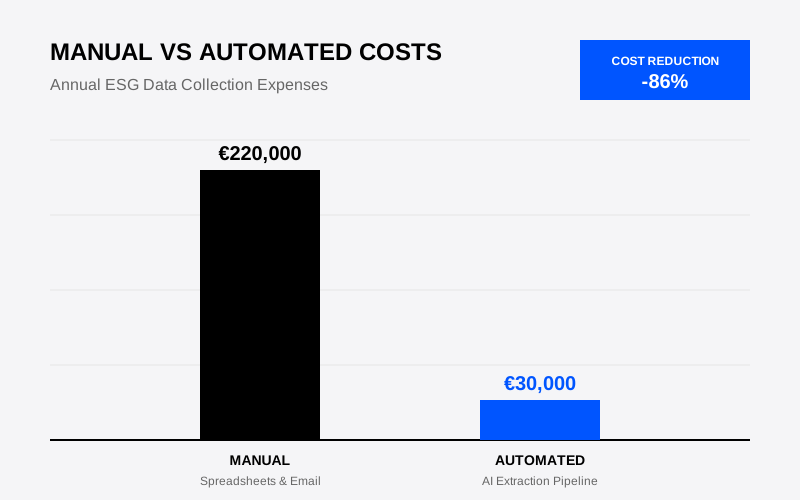 FIG 2.0 — Manual processing costs include both labor and error correction.
Effective automation requires more than basic text extraction. You need a pipeline that creates an audit trail, documenting the source and reasoning behind each reported value. Production-grade ESG pipelines using Vision Language Models (VLMs) typically follow this structure.
Rather than requiring suppliers to complete formatted spreadsheets, build an ingestion layer that accepts documents in their existing format. This includes PDF invoices, scanned certificates, Word documents, and even photos of meter readings. Suppliers are more likely to submit data promptly when they can send documents as they already exist.
Generic AI tools often struggle with structured extraction because they lack specific constraints. Document AI systems work best when they follow a defined JSON schema aligned with ESRS requirements.
For Scope 2 emissions tracking, a schema might look like this:
{
  "facility_id": "FAC-BERLIN-01",
  "billing_period": {
    "start": "2024-01-01",
    "end": "2024-01-31"
  },
  "consumption": {
    "value": 14250,
    "unit": "kWh",
    "type": "electricity"
  },
  "energy_mix": {
    "renewable_percentage": 100,
    "source": "wind"
  }
}
The AI normalizes units automatically—converting 14.25 MWh to kWh, for instance—and ensures all extracted values match the required format.
Automated systems should include confidence scores for each extraction. This serves two purposes: it filters data for review and creates a verification record that auditors can examine.
Typical confidence thresholds work like this:
Instead of reviewing every document, your team focuses on the small percentage that requires verification.
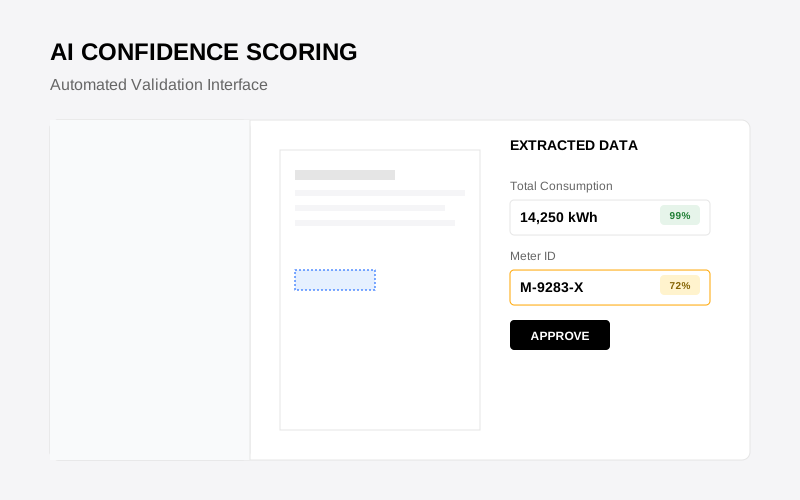 FIG 3.0 — Confidence scores highlight which extractions need human verification.
Accuracy is the primary concern most teams raise about automation. The more relevant question is whether automated systems perform better than manual data entry under real-world conditions.
Manual data entry typically produces error rates between 4-6%. During high-volume periods or when staff are fatigued, error rates can exceed 12%. Document AI systems tuned for utility bills achieve over 99% accuracy. Even complex supplier certificates see accuracy rates above 97%.
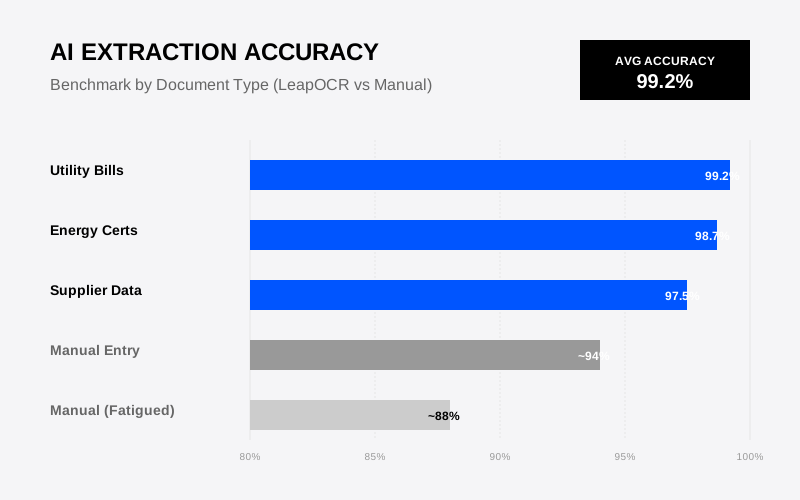 FIG 4.0 — Automated systems maintain consistent accuracy regardless of volume.
Most CSRD reporting deadlines are fixed. Here’s a practical approach to building an automated pipeline:
Start with a focused scope. ESRS E1 (Climate Change) and energy bills provide a good starting point. These documents are high-volume, standardized, and easier to automate than more complex reporting requirements.
Centralize document collection. Create a dedicated email address (such as esg-data@yourcompany.com) and automatically forward all utility bills there. Connect your AI pipeline to process incoming documents.
Define your data schema upfront. Identify exactly which fields your carbon accounting platform requires. Avoid capturing data that won’t be used—this adds complexity without value.
Run a validation pilot. Process 50 historical invoices through the pipeline and compare results against your existing spreadsheet. This highlights both the time savings and any errors in your current data.
CSRD requires the same level of rigor as financial reporting. The difference is that sustainability data is often less standardized, making systematic processing even more critical.
Companies that approach CSRD as a data engineering problem rather than a compliance exercise can build systems that improve over time, reduce audit risk, and free their sustainability teams to focus on analysis rather than data collection.
Ready to build your pipeline? Start a free pilot project or browse our ESG extraction templates.
Try LeapOCR on your own documents
Eligible paid plans include a 3-day trial with 100 credits after you add a credit card, so you can test actual PDFs, scans, and forms before committing to a rollout.
Keep reading
More implementation guides, benchmarks, and workflow notes for teams building document pipelines.
We calculated the real cost of manual ESG data collection. It’s not just the labor—it’s the missed opportunities, the audit risks, and the team burnout.

Common failure points in automated coding and the practical fixes that make systems reliable.
How automation reduces errors and accelerates customs processing while keeping compliance intact.