Published
January 18, 2025
Auditors don't want your PDFs. They want your database. Here is how to use Document AI to transform unstructured ESG reports into verified, queryable JSON.
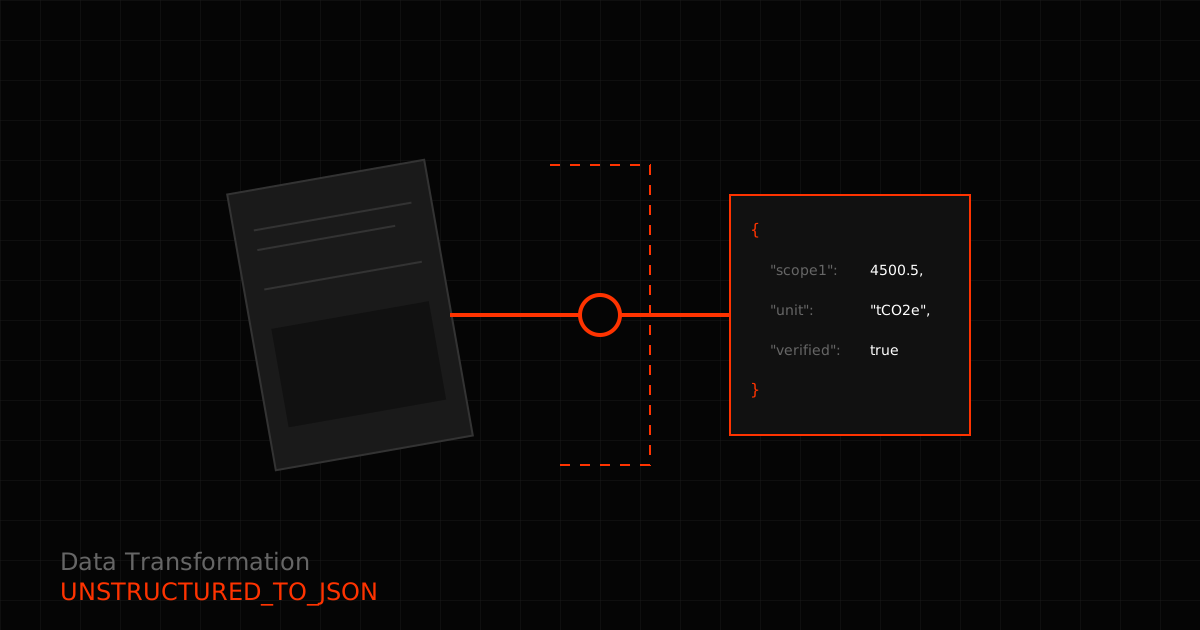
Most ESG data lives in PDFs. Utility bills, energy certificates, supplier emissions reports, carbon offset purchases—all critical information that sits in formats you can’t query or analyze at scale.
With CSRD (affecting 50,000 companies) and SEC climate disclosure deadlines approaching, auditors need structured data. They don’t want folders full of scanned invoices. They want a database.
This guide explains how Vision Language Models (VLMs) convert unstructured documents into machine-readable JSON, and why that matters for audit readiness.
Unstructured documents create practical problems:
DD.MM.YYYY) and number separators (1.234,56)Consider a typical electricity bill. It has:
A human knows where to look. Traditional OCR sees a wall of characters.
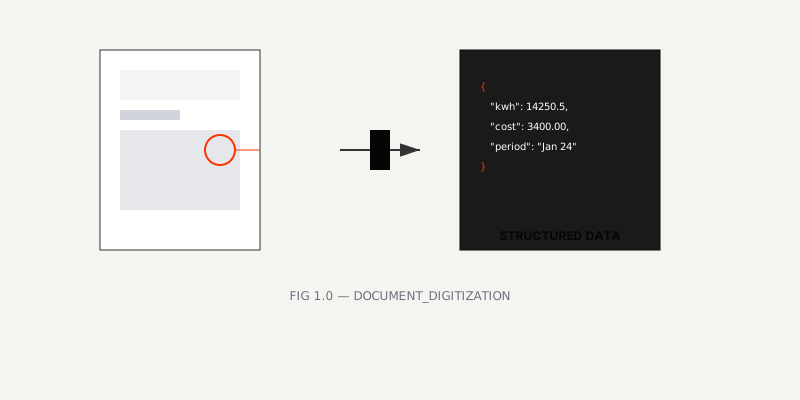 FIG 1.0 — Converting unstructured documents to structured data.
We interviewed ESG auditors about manual data collection. They identified three recurring issues:
For large NFRD-listed companies, annual assurance costs average €320,000. Much of that pays auditors to find documents that should be readily available.
Traditional OCR extracts text characters. It doesn’t understand what they mean.
Vision Language Models (VLMs) work differently. They combine computer vision (recognizing layout) with language models (understanding context). They parse documents, not just read them.
Input: A scanned utility bill from a Spanish provider. Output: Schema-compliant JSON.
Step 1: Document Analysis
The VLM identifies the document type and locates key sections, even when the layout changes from month to month.
Step 2: Schema-Guided Extraction
You define a strict JSON schema. The AI extracts data into this structure, or flags when it can’t.
{
  "facility_id": "MAD-01",
  "billing_period": {
    "start_date": "2024-01-01",
    "end_date": "2024-01-31"
  },
  "energy_consumption": {
    "value": 14250.5,
    "unit": "kWh",
    "details": {
      "peak": 4500,
      "off_peak": 9750.5
    }
  },
  "renewable_mix_percent": 35.5
}
Step 3: Confidence Scoring
Each field receives a confidence score:
supplier_name: 99.8% (Certain)total_kwh: 99.5% (Certain)meter_id: 82.0% (Uncertain—flagged for human review)Your team reviews the 50 documents that need attention, not all 1,000.
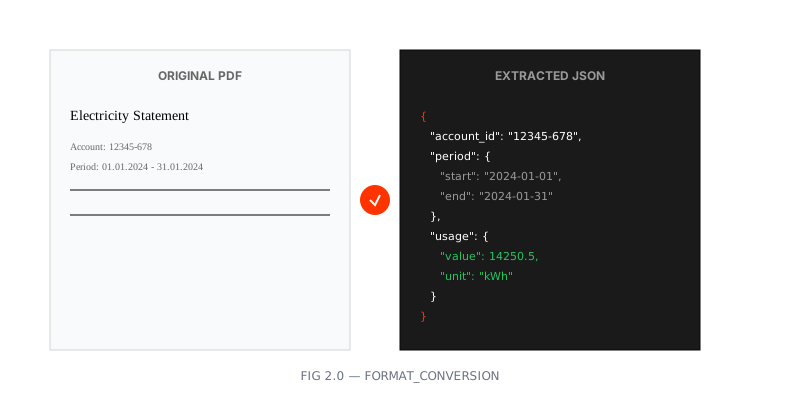 FIG 2.0 — Converting PDF documents to structured JSON.
Can AI read messy documents accurately? Recent benchmarks for models like Mistral OCR and Claude 3.5 Sonnet show meaningful improvements:
In direct comparisons, structured VLM extraction outperforms manual data entry, which has a 4-6% error rate. The AI doesn’t make typos or get tired.
The Manual Process:
The Structured Process:
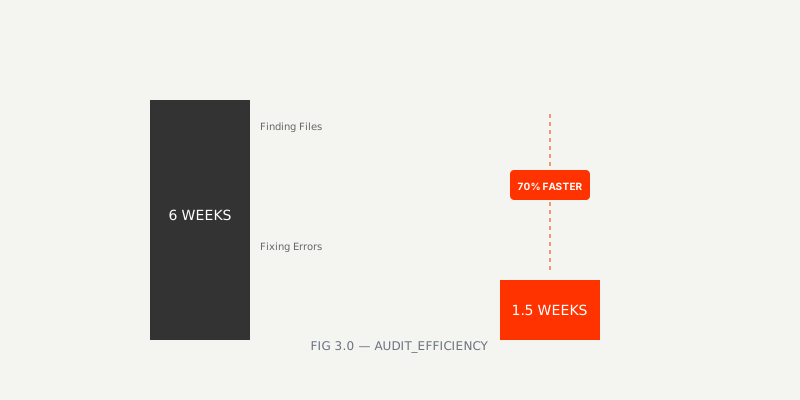 FIG 3.0 — Reducing audit time through structured data.
Structured data serves purposes beyond compliance. When your data exists as JSON, you can query your entire sustainability history:
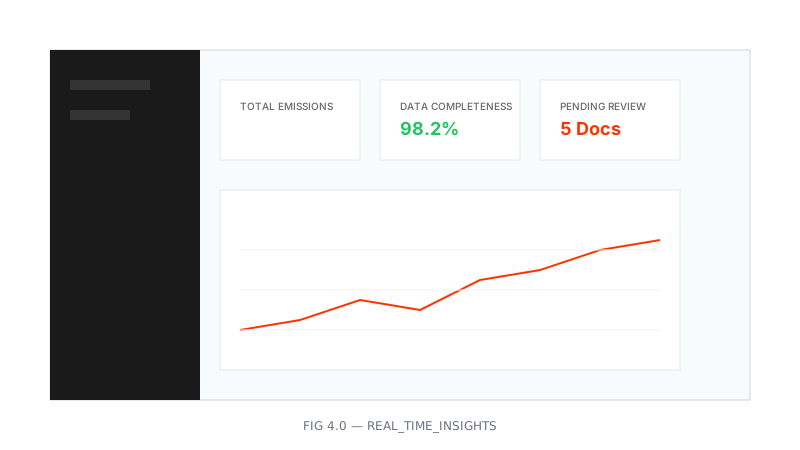 FIG 4.0 — Real-time emissions monitoring through structured data.
Unstructured PDFs create practical problems: they hide risks, increase audit costs, and require manual verification.
VLM-powered extraction converts document collections from a liability into an asset. Instead of folders full of PDFs, you have an audit-ready database that supports both compliance and analysis.
Start a free pilot project or browse our ESG extraction templates.
Try LeapOCR on your own documents
Eligible paid plans include a 3-day trial with 100 credits after you add a credit card, so you can test actual PDFs, scans, and forms before committing to a rollout.
Keep reading
More implementation guides, benchmarks, and workflow notes for teams building document pipelines.
How auditors are demanding structured data and the role of AI in preparing this data for external verification.
Focus on the failure points of traditional OCR (tables, poor scans) and how VLM handles them in complex ESG documents.
A developer guide to scanned PDF OCR: how to decide between markdown and JSON, where PDF parsing fails, and how to build an extraction layer that still works on ugly real files.