Published
January 25, 2026
Stop bleeding revenue to claim denials. Learn how LeapOCR's automated ICD-10 extraction turns messy clinical notes into clean, compliant codes.
There is no phrase more frustrating in healthcare administration than “Claim Denied: Incorrect Coding.”
It represents hours of wasted work. It means your revenue cycle team has to stop, dig through weeks-old clinical notes, call the physician’s office, and restart the submission process.
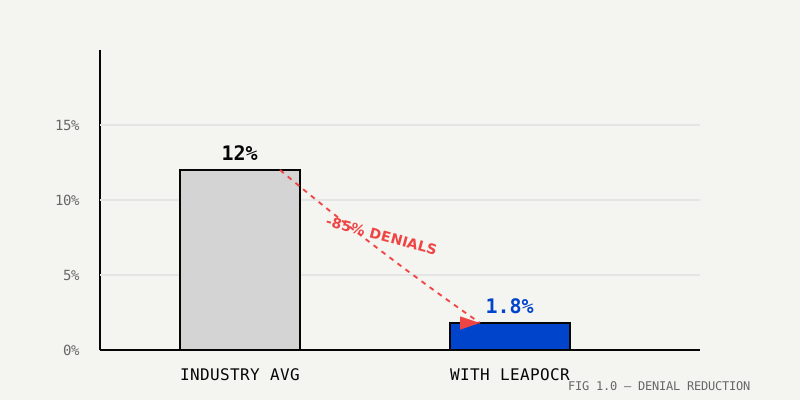
And it’s happening more than ever. In 2024, the initial claim denial rate spiked to nearly 12%, with some providers seeing rates as high as 15%.
For an industry operating on razor-thin margins, this is unsustainable. The “cost” isn’t just the $57 administrative fee to rework the claim; it’s the 35-60% of denied claims that are simply abandoned. That is revenue you earned, but will never collect.
This guide explains how AI-powered ICD-10 extraction is stopping this leakage at the source.
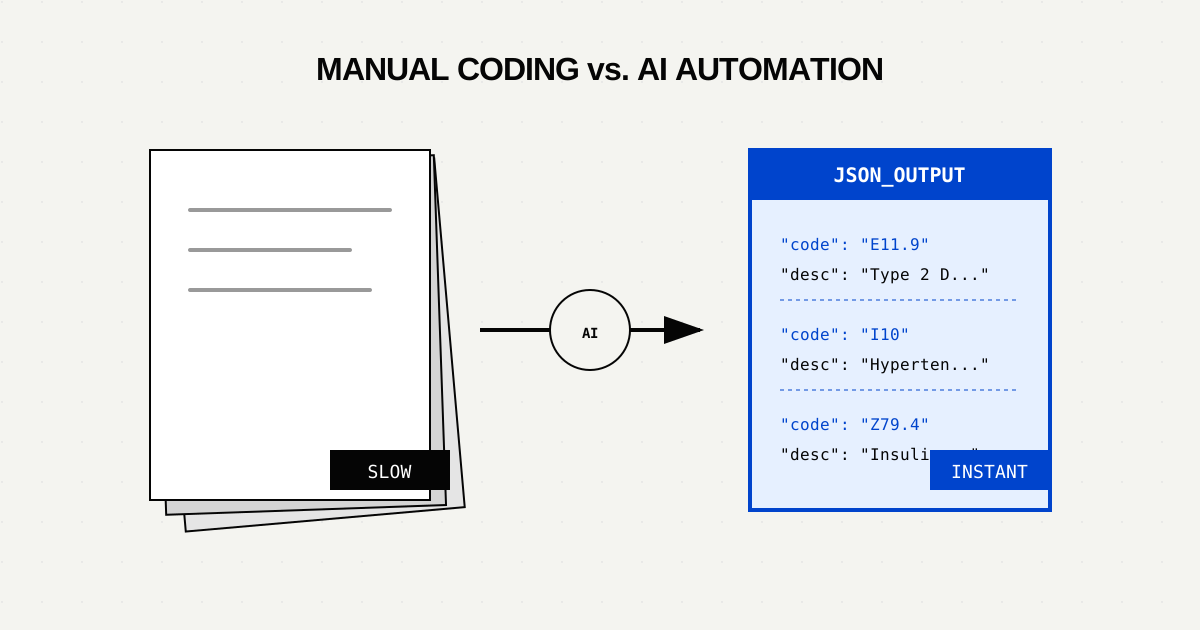
Medical coding is hard. ICD-10-CM has over 70,000 codes. A single mistake—using an unspecified code like E11.9 instead of E11.40 (Type 2 diabetes with neuropathy)—triggers a denial.
Human coders are experts, but they are overwhelmed. They are reading handwritten notes, scanned PDF discharge summaries, and disjointed EHR feeds. Fatigue sets in. Error rates in manual coding hover between 15% and 30%.
LeapOCR flips this dynamic. Instead of coders hunting for data, AI extracts it for them.
You don’t need to replace your RCM software. You need to feed it better data. Here is the operational design pattern for a modern, automated pipeline.
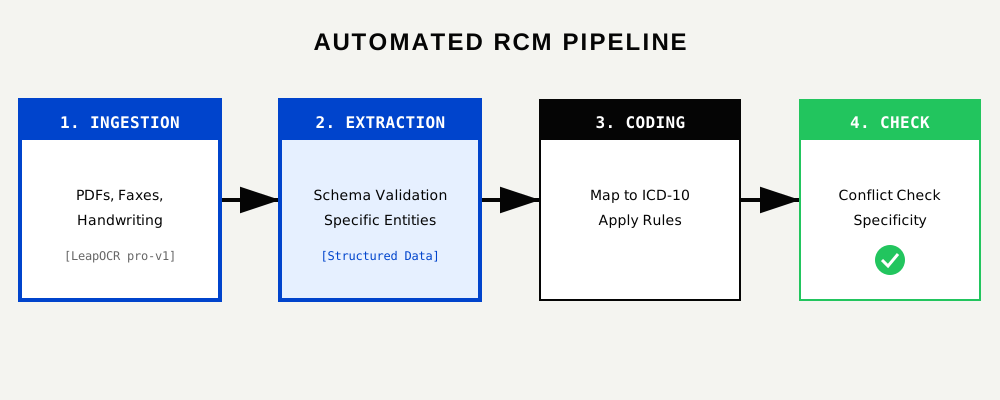
Clinical evidence comes in messy formats: faxed referrals, handwritten doctor’s notes, huge PDF medical records.
LeapOCR ingests them all. Its pro-v1 model is specifically trained to read difficult handwriting and low-resolution scans that baffle standard OCR tools.
Generic AI tools “guess” at diagnosis codes. This is dangerous. A “hallucinated” diagnosis is a compliance audit waiting to happen. LeapOCR uses Schema Validation. You define the exact structure you need (e.g., “Primary Diagnosis”, “Encounter Date”, “Provider NPI”), and LeapOCR extracts exactly that, validated against the source text.
Once LeapOCR extracts the raw entities (“Patient complains of sharp pain in right upper quadrant”), your coding engine maps this to R10.11.
Separating extraction from logic allows you to update coding rules (like the shift to ICD-11) without retraining your AI.
Before the data ever hits your billing system, automated rules check for:
We see teams try to use general-purpose LLMs (like ChatGPT) for medical coding. It works for a demo, but fails in production.
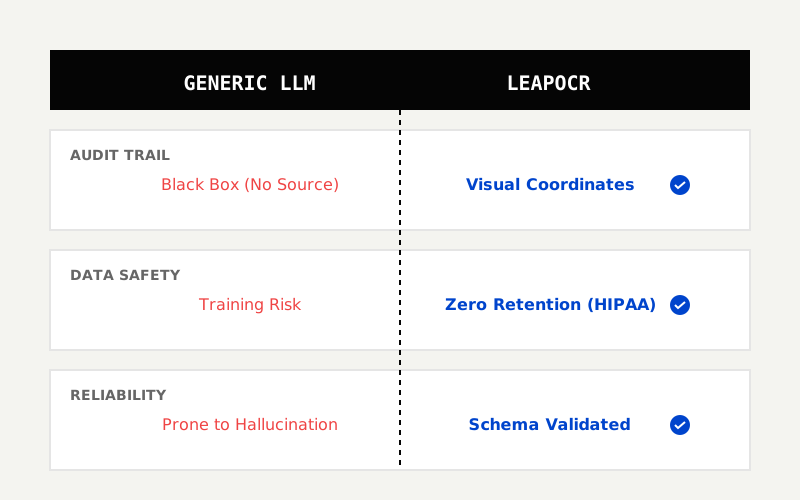
Implementing automated ICD-10 extraction isn’t just an IT project; it’s a CFO-level priority.
The era of manual data entry in healthcare is ending. It is too slow, too expensive, and too error-prone.
By integrating LeapOCR into your RCM workflow, you turn your clinical documentation from a chaotic liability into a structured asset. You stop fighting denials and start predicting revenue.
Ready to clean up your claims?
Try LeapOCR on your own documents
Eligible paid plans include a 3-day trial with 100 credits after you add a credit card, so you can test actual PDFs, scans, and forms before committing to a rollout.
Keep reading
More implementation guides, benchmarks, and workflow notes for teams building document pipelines.
Stop buying a separate AI tool for every department. Learn why a unified Vision Language Model (VLM) beats the 'point solution' approach in modern healthcare.
How AI compares clinical documentation to billed codes to capture missed revenue without increasing audit risk.
A technical breakdown of how document AI extracts BOL data reliably across carriers and formats.