Published
December 8, 2025
We are drowning in PDFs and emails. Why converting unstructured documents into JSON is the master key to AI automation.
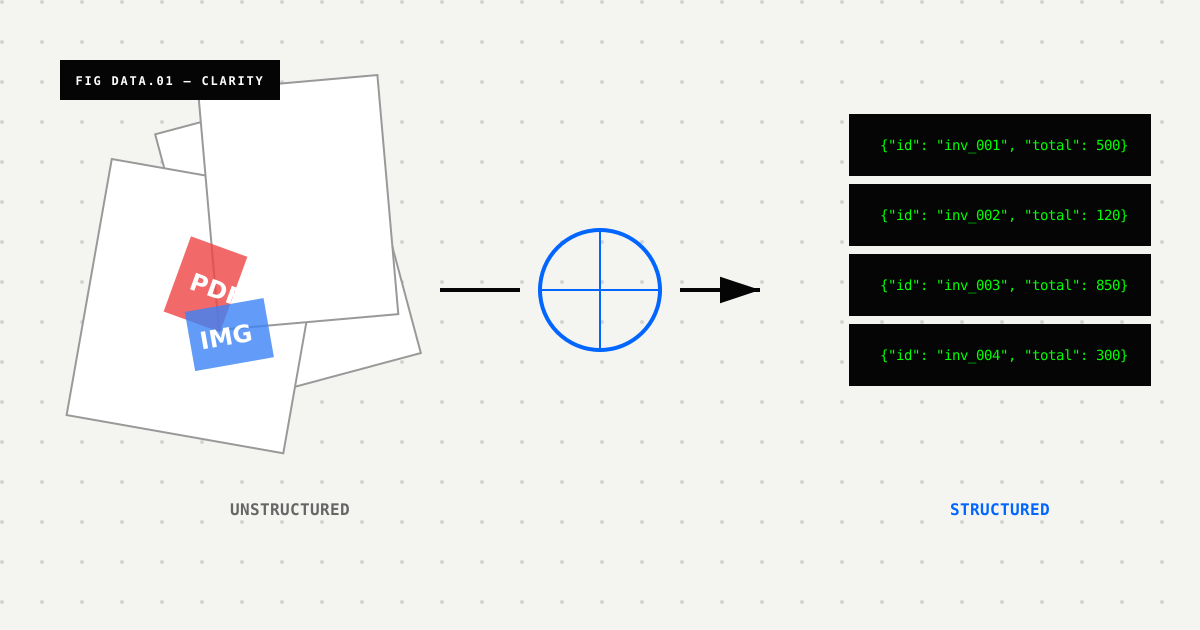
For decades, when people talked about “Big Data,” they meant things computers could easily read: database rows, server logs, clickstreams. Information that was already organized, indexed, and ready to query.
That’s only a small fraction of business data. The majority sits in PDFs, scanned contracts, emails, Slack messages, and screenshots. To a computer, these files aren’t data. They’re just pixels and text blocks without meaning.
Now that AI is becoming part of everyday workflows, converting unstructured documents into structured data (like JSON) has shifted from a nice-to-have to a prerequisite for automation.
Traditional solutions for unstructured data focused on search.
You OCR a document, index the words, and let someone search for “Acme Corp” to find an invoice. This works fine when a human is in the loop.
But automation requires more than finding information. It needs to act on it.
You can’t tell a script to “search for the Acme invoice and pay it.” The script doesn’t know which number is the total due. It might pick up the subtotal, a phone number that looks like currency, or a line item that happens to be formatted similarly.
Automated systems need structured data to function reliably.
Here’s a concrete example.
Raw text output from traditional OCR:
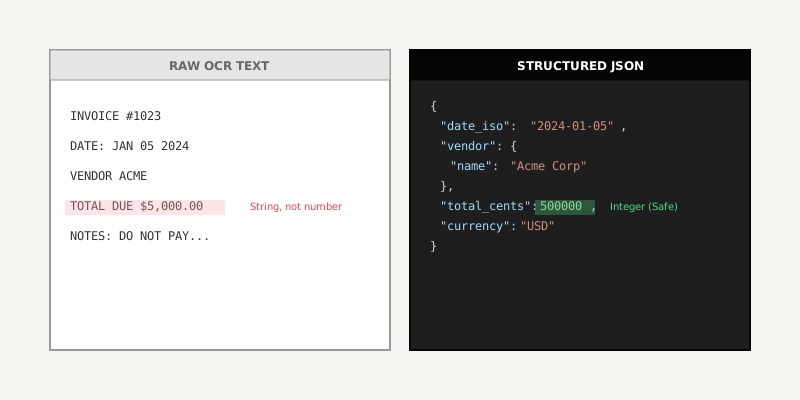
INVOICE #1023
DATE: JAN 05 2024
VENDOR ACME
TOTAL DUE $5,000.00
NOTES: DO NOT PAY BEFORE DELIVERY
Structured data output from LeapOCR:
{
  "invoice_number": "1023",
  "date_iso": "2024-01-05",
  "vendor": {
    "name": "Acme Corp",
    "normalized_id": "vend_8823"
  },
  "financials": {
    "total_due_cents": 500000,
    "currency": "USD"
  },
  "flags": {
    "payment_hold": true
  }
}
With structured data, you can write straightforward code: if data.financials.total_due_cents > 100000: trigger_approval_workflow()
With raw text, you’re back to regex patterns that work until they don’t, usually when someone formats an invoice slightly differently.
AI agents are becoming common in business workflows. They handle tasks like booking travel, processing invoices, and reconciling accounts.
But feeding a 50-page PDF contract to an LLM and expecting accurate analysis is asking for trouble. Models lose context in long documents, miss details, and make errors.
A better approach is to extract specific fields (Governing Law clause, Termination Date, Liability Cap) into structured JSON first. Then the LLM evaluates those values directly. Less text to process means fewer errors.
Structured data gives AI agents reliable inputs rather than forcing them to parse unstructured text.
LeapOCR focuses on generating structure, not just extracting text.
You define a schema that matches your business needs:
LeapOCR processes documents and forces them into that schema. Receipts, scanned forms, emailed invoices. The output is consistent, validated data your systems can use immediately.
Once documents become data instead of files, several things become possible:
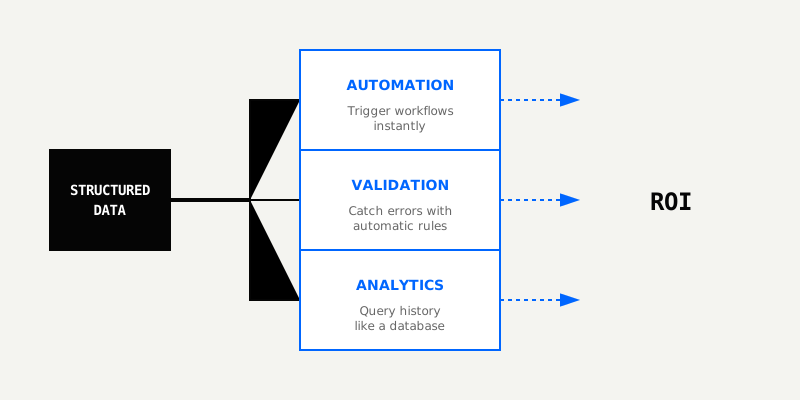
Automated validation: Check every invoice line item against agreed-upon contract prices. Flag discrepancies automatically.
Historical analysis: Query across years of invoices to identify spending patterns. You can’t query a folder of PDFs.
Workflow triggers: Route invoices over $10,000 to the CFO for approval. Send smaller invoices through standard processing. These rules run automatically based on data fields.
Downstream integration: Push structured data directly into accounting systems, CRMs, or databases. No manual data entry.
Most businesses already have the data they need. It’s trapped in documents they can’t query or automate against.
Converting unstructured documents into structured data unlocks that information for the tools and workflows you already have.
Try LeapOCR on your own documents
Eligible paid plans include a 3-day trial with 100 credits after you add a credit card, so you can test actual PDFs, scans, and forms before committing to a rollout.
Keep reading
More implementation guides, benchmarks, and workflow notes for teams building document pipelines.
How to use document AI to collect, package, and submit prior authorization evidence at scale.
How extracting signatures and timestamps from PODs accelerates invoicing and cash flow.
A technical breakdown of how document AI extracts BOL data reliably across carriers and formats.