Published
January 25, 2026
A validation checklist for logistics documents built on schema-first extraction. Learn how to stop bad data at the door.
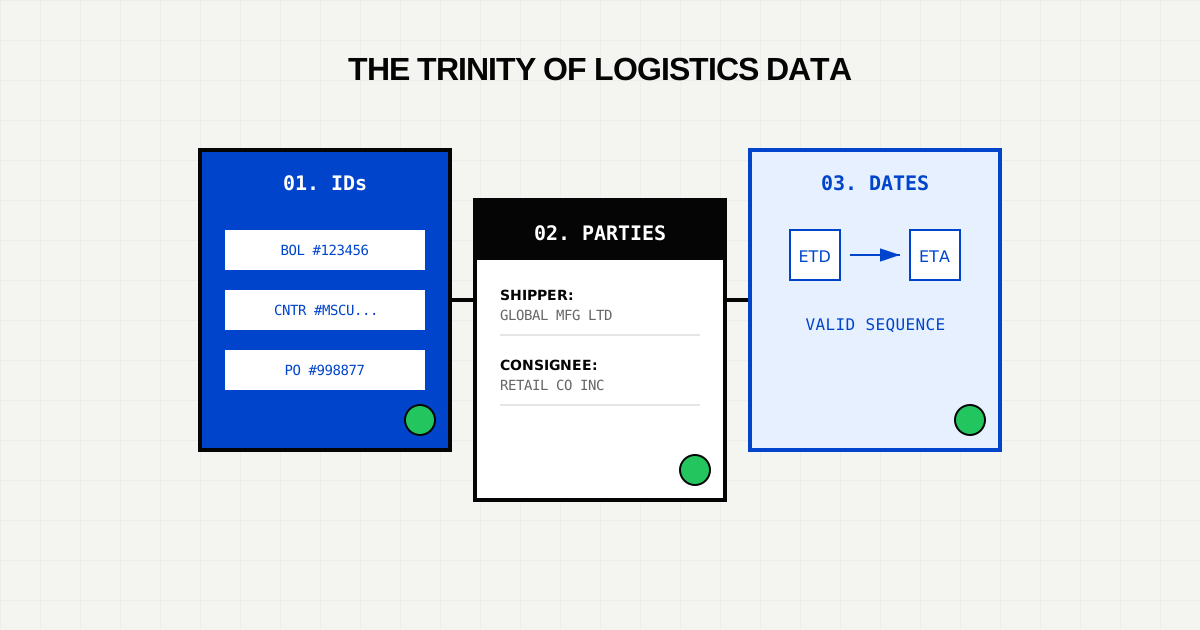
In the chaos of global logistics—where a single shipment generates up to 50 documents—data quality is the difference between a smooth delivery and a customs hold.
We have processed millions of logistics documents. When automations fail, it is rarely because of complex edge cases. It is almost always because basic data points are missing, malformed, or ambiguous.
No matter the document type—Bill of Lading, Commercial Invoice, Packing List, or Arrival Notice—three data points are non-negotiable. If you validate these three, you solve 90% of your downstream integration headaches.
Every document must anchor itself to reality. Without a valid, unique identifier, a document is just a piece of paper floating in the void.
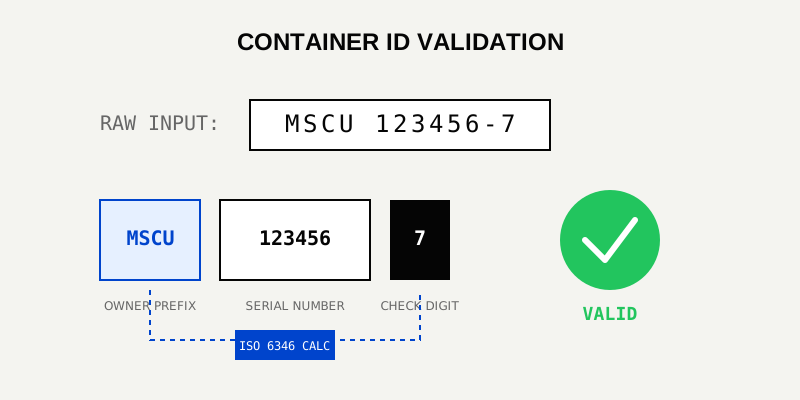
Don’t just check if the field exists. Validate the format.
MSCU1234567 doesn’t pass the ISO 6346 algorithm, it’s a typo. Flag it immediately.// Example: Schema validation for Container ID
"container_id": {
"type": "string",
"pattern": "^[A-Z]{4}[0-9]{7}$",
"description": "ISO 6346 standard container number"
}Logistics is a chain of custody. If you don’t know who sent it or who is receiving it, you cannot clear customs or bill the customer.
The “Shipper” on the Invoice must match the “Shipper” on the Bill of Lading. But they rarely match character-for-character.
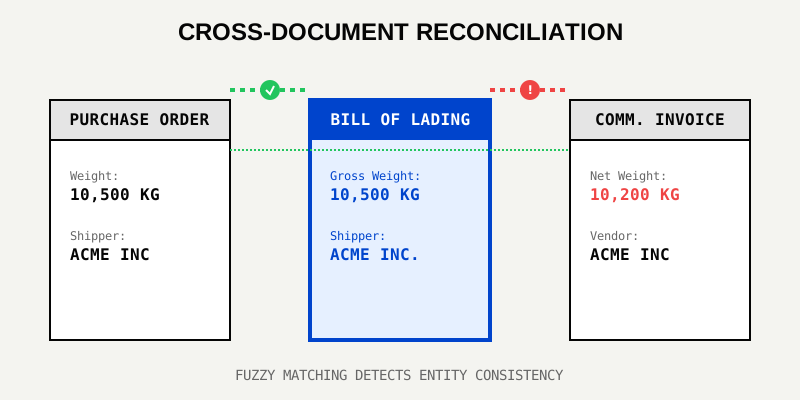
The Fix: Use Entity Resolution. Do not rely on exact string matches. Normalize names against your master data (ERP) or use fuzzy matching scores to verify that these two strings refer to the same legal entity.
Time is money in logistics (literally—demurrage fees are calculated by the hour). Invalid dates break planning algorithms and trigger penalties.
Dates must exist in a valid sequence. A document cannot be issued after the shipment has arrived.
Issue Date <= ETD <= ETAInvoice Date <= Bill of Lading DateIf your OCR extracts an ETA of 2024-02-30 (a date that doesn’t exist), your system must reject it before it crashes your database.
Where do you enforce these rules? At the door.
Do not let invalid data enter your ERP or TMS system. Implement a “Validation Gate” immediately after extraction.
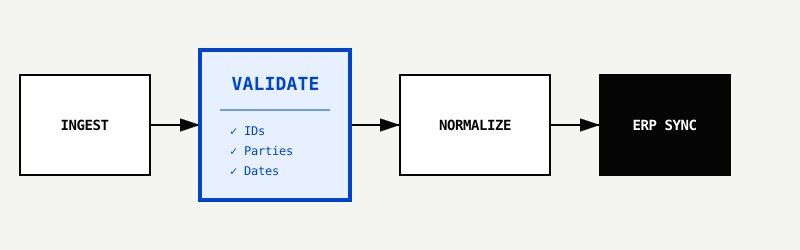
You cannot rely on humans to catch every typo. You need automated, code-based guardrails.
By enforcing strict schemas for strict data (IDs, Dates) and intelligent matching for fuzzy data (Parties), you create a self-healing pipeline.
Reliable logistics starts with validated data. These three fields—IDs, Parties, Dates—are the minimum standard. If your automated processing can guarantee these three are correct, you have built a foundation for true automation.
Try LeapOCR on your own documents
Eligible paid plans include a 3-day trial with 100 credits after you add a credit card, so you can test actual PDFs, scans, and forms before committing to a rollout.
Keep reading
More implementation guides, benchmarks, and workflow notes for teams building document pipelines.
A technical breakdown of how document AI extracts BOL data reliably across carriers and formats.
How AI extracts and validates key fields from certificates of origin to reduce compliance risk.
Why structured, high-accuracy document data is essential for financial services built on logistics workflows.